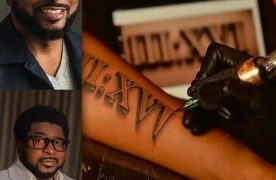


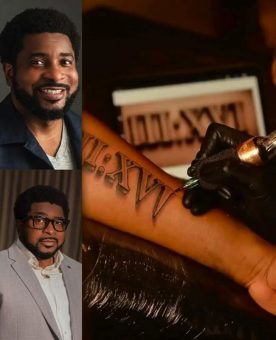
Popular Nigerian relationship coach and pastor, Kingsley Okonkwo, has sparked fresh conversations online after addressing criticism over his John 3:16 tattoo. During a recent interview on News Central, the outspoken pastor challenged long-standing religious views that label tattoos as sinful, calling such beliefs unsupported and harmful to societal growth.
According to Okonkwo, there is no clear biblical passage that forbids Christians from having tattoos. He explained that many of the arguments against body art are based on personal opinions, church traditions, or cultural assumptions rather than scripture or science.
In his words, condemning tattoos without evidence only promotes judgment and misunderstanding within the faith community.
“There is no scripture that says a child of God cannot have a tattoo,” Okonkwo stated. He questioned why tattoos are often described as bad when no one can clearly explain the reason behind the belief. He emphasized that neither the Bible nor science supports the idea that tattoos reflect moral failure or bad character.
The pastor also criticized the habit of judging people based on outward appearance, describing it as outdated and illogical. He argued that linking tattoos, clothing, or lifestyle choices to crime or immorality does more harm than good. To illustrate his point, Okonkwo compared the stigma around tattoos to blaming jeans for robbery simply because a criminal once wore them.
“If someone wore jeans and robbed a bank, does that suddenly make jeans evil?” he asked, highlighting how flawed such reasoning can be.
Okonkwo further stressed that character is shaped by values, not appearance. He noted that both good and bad people can have tattoos, making it unreasonable to use body art as a measure of someone’s integrity or faith. According to him, judging spirituality by looks distracts from what truly matters—personal faith, character, and positive impact.
Expanding the conversation beyond tattoos, the pastor linked this mindset to the church’s reluctance to engage in areas like politics. He observed that many believers avoid certain spaces because they are seen as “dirty,” only to later complain about poor leadership and societal problems. In his view, withdrawing from important sectors leaves them in the hands of those perceived as unfit.
“We avoid everything that looks bad, and then we complain,” Okonkwo said, urging Christians to rethink this approach.
He concluded by encouraging believers to focus less on appearances and stereotypes and more on living out their faith through values, responsibility, and meaningful contribution to society. For Okonkwo, tattoos are not the issue judgment without understanding is.